During this session we looked at deconstruction and pastiche and their relationship to graphic design.
Deconstruction
Deconstruction was created by Derrida, initially as a mode used in questioning existing and assumed hierarchies and structures, such as speech being greater than writing. It was Ellen Lupton in her 1996 book 'Design, Writing, Research' who explored the aspects and methods of deconstruction and it's relation to graphic design.
'Deconstruction focuses not on themes or imagery of its subjects but rather on the linguistic and industrial systems that frame their production.'
There is an argument with Derrida's looked on deconstructionism that an intellectual system built on the opposition between reality and representation is, in fact dependant on representation to build itself. Despite the fact that language is considered superior to writing, both rely on repeatable signs in order to function.
Taking this further into the world of graphic design we can look at typography. If writing is a copy of spoken language then typography is a mode of representation even father removed from the primal source of meaning in the mind of the author. It is not in opposition with written text, rather it is embedded within it.
 |
| Hori's Poster is an example of typography used in deconstruction. |
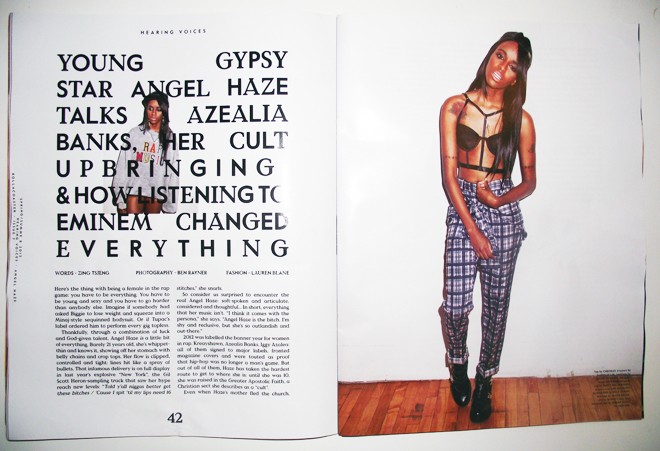
We can also look at layout as another layer embedded with language, writing and typography. :about and typography can inform the meaning of the content just as much as the words themselves. Examples of layouts that used deconstruction to add an extra layer to meaning include the layout to GLAS, designed by Eckersley, House of Leaves designed by Danielewski and the layout of the Mouse and the Fury from Alice in Wonderland.

GLAS is an academic piece of writing, the layout of it is based off of early printed books. The voice of the main text and the voice of the footnotes are represented through different fonts and the way they are laid out together entwines the both as opposed to separating them.

House of Leaves is a book compiling letters written from the authors mother from within a mental hospital. The layouts represent her scattered mind and the sense of mess and confusion that comes with mental illness. Her words are given a stronger meaning by placing them in a messy and muddled context.

The Mouse and the Fury is more of an illustrative example of layout design, the words of the poem twist and turn down the page visually representing the tail of a mouse.
Pastiche
Feed Jameson coined the term pastiche, it is described as a loss of connection to history and a pure fascination to the present. He explains that post modernism in design has left history emptied out stylisations that can be commodified and consumed.
Pastiche is simple a parody or imitation of a particular unique, idiosyncratic style.
Examples of pastiche within graphic design include deigns by Stranger and Stranger and packaging for the brand Soap and Glory.

Stranger and Stranger parody Victorian style posters and etchings and reference the style of image and typography used in these contexts. The overall look is one that I personally find pleasing, however there is a danger that if a form of pastiche becomes common place it can render it's previous history as useless; it will only be understood in relation to the present.

Soap and Glory do not directly copy the advertising style of the 40's and 50's, rather it takes codes and styles commonplace from the era and mixes them with more modern fonts and techniques in order to create this branding parody.