Wednesday, 22 October 2014

COP Lecture 2: Subculture: The Meaning of Style

Subcultures are always something presented by the youth culture, born out of fashion decisions and music styles. As a whole when subcultures begin they issue symbolic challenges to the larger society, however over time they all must end. They establish new conventions, create new commodities, new industries and are eventually swallowed by the society they initially challenged. 

After watching 'Subculture' (2012) by Dir Don Letts and presented by Fred Perry outlines each subculture, what they were born out of and what they each stood for.

UK Youth culture began after the second world war, there were no more uniforms to be worn and so people began to make their own. Subcultures were born alongside the term teenager, young people had extra money and extra time and so spent this time and money on rock and roll records rolling in from the good ol' US of A. 


The first subculture were the Teddy Boys. Being a parody of the upper classes who wore mainly Edwardian style dress, they wore a drape jacket and crepe soled shoes. The theory was, as a working class teenage boy, you had no money or education but you could still choose your clothes and consume music. 


There were also the American inspired rockers who wore big battered leather jackets and jeans, rode motorcycles, and cared very little about their appearance. The ideal behind rocker culture was the freedom to travel anywhere not looking pretty. 
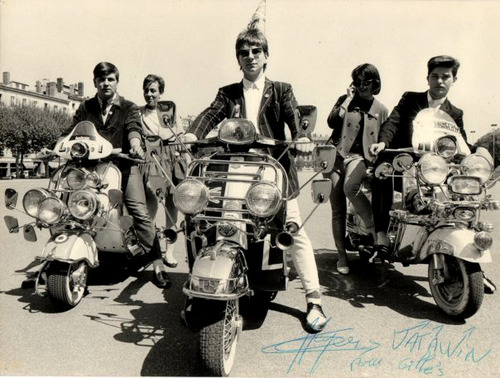


Then came the Modernists (Mods) who adopted skinny ties, clean hair cuts. They took a lot of their inspiration from European fashion and adopted the Italian mode of transport- the scooter. This, like with the motorbike for the rockers, gave a sense of freedom and this freedom meant there was less of a reliance on the older generation. 

Mods and rockers were renowned for fighting, there was no more war for the country and so the subcultures created their own. The most famous of which occurred in Brighton in 1964. The media demonised both groups as violent and out of control.

Eventually mod began to divide into two groups, the first was influenced by other cultures, wore looser clothing and eventually became hippies. The other went more tight and clean, cut their hair very short, wore suspenders and boots and became what was later named the Skinheads.


The skin heads of the 60's was a pure subculture born out of mod and Rude Boy influences and were not burdened with the racist label they have today. The racial side was only born out of the late 70's revival of the skinhead look adopted by the EDL and nationalist groups.

Rude Boy Look


Northern Soul followed, and the style could be considered to be purely about wearing clothes to dance in. Fixated on the latest record and unknown record from the black American genre, it was all about the music and all about the dancing.


What followed next was punk, possibly the most famous of all subcultures. Punk was all about not giving a shit, ripped clothes, safety pins, being an outsider. It was about doing what you want even if you weren't very good at it. It opened the doors for many new bands and a lot of female bands, something that hadn't been seen to nearly the same extent before.


Two tone came next. A mixture of reggae and punk created the classical ska sound we all know today. The Thatcher regime put a lot of pressure on working class people, anger was felt by both black and white working class teenagers and two tone music was a way of expressing their anger (especially in The Special's Ghost Town) it was a unity between both races in music and fashion.


With the birth of drug culture came rave culture. People dancing in warehouse parties, tripping off their minds, wearing casual sports clothes suitable to dance and sweat in. You couldn't look good in rave culture because even if you took time on your appearance you'd look like a drowned rat 20 minutes into dancing. 


The final, and some call it last subculture was Britpop of the 90s. Although many people speculate whether this was a sub culture or not- it was driven by the music made and not started by a bunch of working class teenagers trying to find their own identity. Whether it is or isn't a subculture doesn't change the fact that britpop caused some excellent music to be made.


Monday, 20 October 2014

COP Lecture 1: The Gaze and The Media

It was said by Berger: 'Men look at women, women watched themselves being looked at' 

The gaze is a term describing the sexualisation of women through art and media because of the object of our desires not looking back. this gives the viewer the impression of permission as their gaze is not being challenged and the subject appears submissive. 

This gaze is found in many classical paintings throughout history the most famous being Hans Memling's 'Vanity' (1485). It's said that because she is more occupied with looking at herself, that gives us permission to look at her, she is not challenging our gaze.


There are many devices used to hide the subjects gaze in order for them to not be able to challenge ours, like with 'Birth of Venus' (1863) painted by Alexandre Cabanel, her arm hides her eyes from views whilst her body is still appearing open and free to look at. 


Examples of the gaze are not only present in paintings, there are also countless examples found in modern photography and design, such as Wonderbra's 'Hello Boys' campaign of 1994. The billboard ad was said to have caused traffic problems from so many drivers slowing down to look at it. However once again we see our gaze is neither met nor challenged giving permission to look and sexualising the woman as a mere thing to stare at.


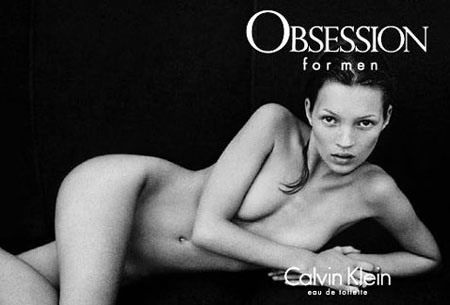
There are some examples where the gaze is met, however our gaze remains unchallenged, it is more encouraged with, for want of better words, a 'come hither' look. We are encouraged to continue staring. An example of this is the obsession for men advert (1993)


In this series of adverts for Tom Ford's fragrance for men (2007), we see a further device used to encourage the gaze. In these images the women is segmented into different sections of her body, boobs, legs and vagina, vagina and stomach, this breaks down the view of her a whole person and makes her a mere sum of her body parts. 


The gaze is used in many of todays adverts and although can be said to exist in some adverts where the male is the subject of our gaze majority of the time it is women being turned into objects. This has caused backlashes across society where is seems to be deemed normal for a women to be objectified. Unfortunately this means many women, such as Lucy Ann Holmes, who stand for any feminist issue can be received with tonnes of anger and backlash (all she wanted was for a women to be placed back onto a note bill and she received death threats).

It also means that we almost expect women to be naked, this year with the scandal around leaked nude photos of celebrities it was surprising how much angry backlash was geared towards the celebrities themselves for taking these personal photos for personal use rather than towards the person or people who actually invaded their privacy and leaked them. (It also a funny surprise when it ended up being only female actor's pictures that were leaked and no males)

COP Seminar 20/10

We looked at an extract from Contemporary Sociological Theory on the subject of Identity.

The first half of the chapter focused on Sheldon Stryker's identity theory based on social hierarchies. His theory can be summarised thus, we have multiple identities and the identity or identities we choose to reveal depend on social and physical structures in place. These can include the people we are with, the place we are or our position/social status within society. Our many identities are held with different regard, the amount of commitment we place in specific identities is based on their position within our own salience hierarchies; the ones we deem the most important are at the top, the ones we deem less important, at the bottom. The position of an identity on the salience hierarchy is determined by outside validation, we seek approval of an identity from others and it is others who determine the effectiveness of our various identities. Because of this the more committed we are to a particular identity the more our self-esteem is tied up within it's validation, if we do not gain approval or validity from others it is a huge blow to our self esteem and our emotions. Stryker describes emotions as makers of adequacy, our emotions exist to inform us of whether or not our performance was successful or unsuccessful.They motivate individuals to play particular roles that revive positive reinforcement. 

The second part of the chapter looked into George McCall and John Simmons' ideas of identity. Unlike Stryker who believes identity is determined and pre planned by a set of structures, physical or social. They believe that identity or role performance is mostly improvised as a way to achieve goals and that this role reflects an idealised or imagined view of ourselves and is the driving force behind our behaviour. The validation sought out for this form of identity comes from ourselves rather than others and due to the high standards we set for ourselves we will always feel some sense of dissatisfaction in regards to our role performance. We review and validate our performances based off of the interpretation of gestures of others, due to ambiguous nature of gestures and social interaction there is plenty of room for this interpretation. The aim of reviewing our roles is in order to search for support of our chosen identities and several mechanisms are in play in order to maintain our vision of support, these include short term credit; looking back on previous experiences of validation to certify an identities effectiveness, the selective perception of cues; only noticing the responses that confirm the identity choice, selective interpretation of cue; seeing the social cues and interpreting them in a way that supports identity, withdrawing from interactions; moving from a situation that doesn't support chosen identity to one that does, switching role identity; changing from one identity to one that is more likely to bring support, scapegoating audiences; blaming audiences for lack of support as opposed to the chosen identity,  disavowing unsuccessful performances; rejecting blame and denying responsibility for failure and rejecting the audience if they withhold support for a performance. 

With many interactions being unambiguous, as mentioned earlier, other than personal interpretation, there is a degree of exchange negotiation and altercasting,  negotiating the position both parties will play. e.g. whose the leader, and attempting to persuade others to take specific roles. The reward methods for our role performances are both intrinsic and extrinsic, there are the obvious rewards of money, or perhaps pride, however McCall and Simmons argue that the largest reward is support and validation of a role performance. They go on to state that is our expectations of a role performance are met that our need for validation begins to decline, however if they fall short or over achieve what was expected then our need for the support and validation increases.


So how can those theories relate to or even inform graphic design? Well I have two theories, Stryker's theory relates to design driven by social confinement. The target market and what they expect to see is the driving force behind a design, where as is McCall and Simmons the driving force is the personal identity of the designer. They have an idea if what they want their design to look like and will seek all support they can to validate their belief in their own design identity. My second theory is similar to the idea for Stryker's theory, that identity is important for a designer to understand due to our need to please and design for a specific target audience. These theories allow us to understand the people we are targeting in order to best market our designs and products.


Linking Interactionalist Identity to Psychoanalysis 

There are some similarities and connections between the socialist and interactionalist identity and the theories of psychoanalysis, specifically those subjects related to ego, desire and the mirror stage. If we look at Freud’s idea of the ego ideal, we see a similarity with the ideal identity described in McCall and Simmons’s. The ego ideal is an ideal personality or identity perceived by an individual just as the role identity is described as an ideal or imagined version of self. Moving onto Lacan’s ideas of desire, that an object or person is considered desirable simply because others deem it so, we can see a striking similarity with the social identity described by Stryker. The identity we form can be a conclusion of understanding and imitating characteristics and identities deemed socially acceptable by a specific group. The characteristics we adopt within certain identities are only considered successful choices because others believe them to be and validate them to be so. The only reason we fully commit to certain identities is because we believe them to be the ones that people validate the most, they only become important to us because others deem them as best and in certain cases, the ones that fit best into societal structures determined by a majority.

We can also compare Freud’s theory of id, ego and superego to the social identity described by Stryker as well as the idealised self specified by McCall and Simmons. The id is our unconscious instinct the demands immediate satisfaction to instinctual feelings, such as anger, hunger or sexual desire; the ego is the partly conscious, partly subconscious realistic part of our brain, it aims to satisfy the id’s wants but it creates a realistic, however not moral strategy in order to do so; the super ego is the area of ourselves that holds the morals and the values, often influenced by parents and authority figures as children, it controls the id though conscience a way the ego alone cannot and punishes and rewards the id through emotions such as guilt or pride, it can withhold id satisfaction, and projects an ideal form of self for us to work and aim towards. The conscience can be linked to Stryker’s social identity, what is considered good or bad is determined by what others deemed good or bad, and often our behaviour is modified from what we want to do to what we shouldn’t do due to social pressure. You may want to jump on the table and have sex with the person opposite you, however sex is labelled as societally forbidden and so our conscience disallows us the right to do so through embarrassment and guilt. In the same way that we may have identities that we wish to display, but certain societal structures labels them as inappropriate so we don’t reveal them. The other half of the super ego, the ideal self, as mentioned earlier is just like the ideal or imagined identity we strive towards described by McCall and Simmons.

Finally we can look at the mirror stage, this is similar to the ideal self previously mentioned but relates on a more physical sense of self. As infants we enter a stage of development where we begin to recognise our own reflections and experience an external image of our bodies, this leads us to develop a mental representation of ourselves or “I” this perception of “I” becomes the basis for our identities. Due to the undeveloped condition of our body and the preconceived ideas of a body as a unified whole we begin to establish an ideal version of “I” that we will strive towards for the rest of our life. This is, once again, like the ideal or imagined identity from McCall and Simmons’s book; we have a perceived inner version of ourselves which we strive towards and which drives us to behave the way we do.