It was said by Berger: 'Men look at women, women watched themselves being looked at'
The gaze is a term describing the sexualisation of women through art and media because of the object of our desires not looking back. this gives the viewer the impression of permission as their gaze is not being challenged and the subject appears submissive.
This gaze is found in many classical paintings throughout history the most famous being Hans Memling's 'Vanity' (1485). It's said that because she is more occupied with looking at herself, that gives us permission to look at her, she is not challenging our gaze.

There are many devices used to hide the subjects gaze in order for them to not be able to challenge ours, like with 'Birth of Venus' (1863) painted by Alexandre Cabanel, her arm hides her eyes from views whilst her body is still appearing open and free to look at.

Examples of the gaze are not only present in paintings, there are also countless examples found in modern photography and design, such as Wonderbra's 'Hello Boys' campaign of 1994. The billboard ad was said to have caused traffic problems from so many drivers slowing down to look at it. However once again we see our gaze is neither met nor challenged giving permission to look and sexualising the woman as a mere thing to stare at.

There are some examples where the gaze is met, however our gaze remains unchallenged, it is more encouraged with, for want of better words, a 'come hither' look. We are encouraged to continue staring. An example of this is the obsession for men advert (1993)
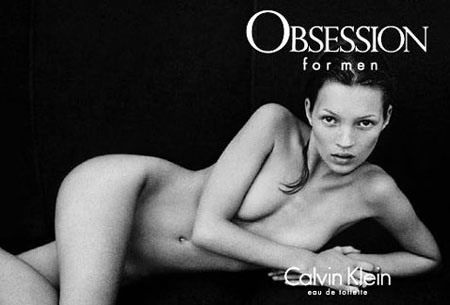
In this series of adverts for Tom Ford's fragrance for men (2007), we see a further device used to encourage the gaze. In these images the women is segmented into different sections of her body, boobs, legs and vagina, vagina and stomach, this breaks down the view of her a whole person and makes her a mere sum of her body parts.


The gaze is used in many of todays adverts and although can be said to exist in some adverts where the male is the subject of our gaze majority of the time it is women being turned into objects. This has caused backlashes across society where is seems to be deemed normal for a women to be objectified. Unfortunately this means many women, such as Lucy Ann Holmes, who stand for any feminist issue can be received with tonnes of anger and backlash (all she wanted was for a women to be placed back onto a note bill and she received death threats).
It also means that we almost expect women to be naked, this year with the scandal around leaked nude photos of celebrities it was surprising how much angry backlash was geared towards the celebrities themselves for taking these personal photos for personal use rather than towards the person or people who actually invaded their privacy and leaked them. (It also a funny surprise when it ended up being only female actor's pictures that were leaked and no males)

No comments:
Post a Comment